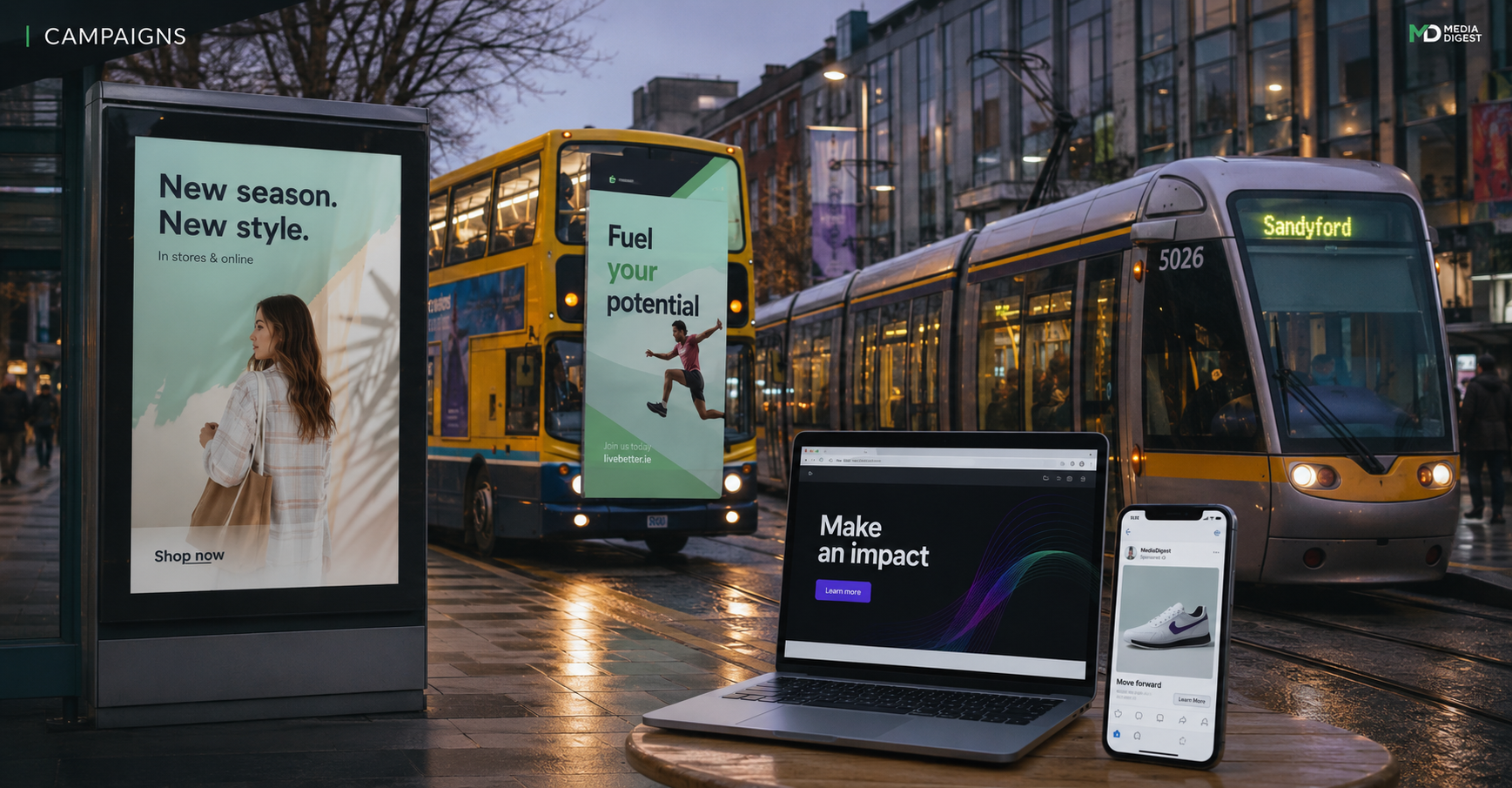
In an era obsessed with dashboards, automation and AI, it is tempting to think technology alone can build a winning media campaign Ireland strategy. But the brands that consistently make smarter decisions are still the ones that understand how real people think, feel and behave.
That was the clear message from RED C managing director Ciara Reilly, who argues that while tools may change, the core need for trustworthy human insight does not. For marketers, agencies and brand leaders planning the next campaign, that matters more than ever. Data is abundant, attention is fragmented and pressure on budgets is relentless. In that environment, insight is not just useful; it is a competitive advantage.
Media Campaign Ireland Planning Starts With Human Behaviour
A successful media campaign Ireland brief is rarely just about reach, impressions or short-term response. At its heart, it is about understanding audiences well enough to shape messages, channels and creative that actually resonate.
Reilly’s view is simple: businesses will always need to understand real people. That means knowing:
- How consumers engage with brands
- What influences buying decisions
- Why certain messages connect while others fail
- How sentiment changes across categories and contexts
This is where market research remains central to campaign development. While AI can accelerate analysis, it cannot replace the value of asking the right questions, interpreting nuance and connecting evidence to real business decisions. For any media campaign Ireland strategy, that clarity is often what separates wasted spend from effective communication.
Why AI Is Changing Research, Not Replacing It
AI is now embedded across marketing, analytics and audience intelligence. In research, it is already being used to review large datasets, code open-ended responses, identify patterns and speed up reporting. That can be a major gain for agencies and clients working under tight timelines.
But the real opportunity is not automation for its own sake. It is freeing up researchers and strategists to focus on higher-value work, including interpretation, strategic thinking and the human stories behind the numbers.
Where AI adds value
- Faster processing of survey data
- More efficient reporting workflows
- Pattern recognition across large information sets
- Support for segmentation and persona development
Where human expertise still leads
- Framing the right business question
- Understanding cultural context
- Evaluating emotional drivers
- Turning findings into campaign action
For brands developing a media campaign Ireland roadmap, the lesson is clear: AI should enhance expertise, not replace it. The strongest outcomes come from combining technology with robust methodology and experienced interpretation.
From Data Overload to Clearer Campaign Decisions
One of the biggest challenges facing marketers today is not a lack of information. It is too much of it. Brands have first-party data, platform metrics, social listening, CRM insights and third-party research, yet many still struggle to answer the most important questions: what matters most, what does it mean and what should we do next?
That is why clarity has become so valuable. A modern media campaign Ireland approach needs more than raw data. It needs a coherent story that links audience behaviour to channel planning, messaging and commercial results.
Clients are increasingly looking for partners who can move beyond presenting results and instead help shape decisions. That includes:
- Identifying the audience segments with the greatest potential
- Testing creative and brand messaging before launch
- Understanding pricing, customer experience and brand perception
- Measuring advertising effectiveness after the campaign goes live
In other words, research is no longer a reporting function at the edge of marketing. It is becoming more central to strategy, especially when campaign budgets must show a measurable return.
The Risk and Promise of Synthetic Data
As AI tools become more sophisticated, the debate around synthetic respondents and artificial datasets is growing. This is particularly relevant for any media campaign Ireland project that depends on accurate audience understanding.
There is an important distinction between AI-powered personas built from real research and fully synthetic data generated by AI alone. Personas grounded in genuine respondent data can help teams explore findings faster and make insights more accessible. But synthetic data without a strong real-world foundation can quickly become unreliable.
That is a critical warning for marketers. If the source material is weak, outdated or unclear, campaign decisions based on it may be flawed from the start. Real people, real behaviours and transparent methodology still matter.
Used carefully, augmented data can support analysis in niche or hard-to-reach groups. Used carelessly, it can distort the very audience picture a campaign depends on.
What This Means for Campaigns and Brand Strategy
The implications for agencies and advertisers are significant. Whether planning a product launch, ad test, brand repositioning or public-facing communications push, the fundamentals remain the same. A strong media campaign Ireland strategy should be built on evidence, not assumption.
That means investing in research that is actionable rather than decorative. The old model of a report sitting unread on a shelf is no longer acceptable. Insight should continue to influence decision-making long after the initial project ends.
For campaign teams, that translates into a few practical priorities:
- Use audience research early, not just after launch
- Test messaging before significant media spend is committed
- Demand transparency around methodology and data sources
- Focus on insight that can guide action across media, creative and customer experience
- Balance speed with quality when using AI-supported tools
Irish consumers, meanwhile, continue to show resilience despite prolonged economic and social uncertainty. That makes continuous audience understanding even more important. Assumptions can age quickly, and campaign relevance depends on staying close to how people are actually living, spending and choosing.
Conclusion: Media Campaign Ireland Success Still Comes Back to People
Technology will keep changing how research is delivered, analysed and activated. But the foundation of an effective media campaign Ireland strategy remains the same: understanding real human behaviour with clarity, rigour and context.
For brands under pressure to prove results, that is the takeaway. AI can speed up the process, scale analysis and improve efficiency, but it is human insight that turns information into better decisions. In a crowded and fast-moving market, the campaigns that win will be the ones built not just on data, but on genuine understanding.