The pace of change in advertising has rarely felt faster, and every media campaign ireland team is being forced to rethink what effective planning looks like in 2026. From AI disruption and shifting consumer pressure to the rise of digital out of home, branded podcasts and platform dominance, Irish marketers are operating in a market where agility matters as much as budget.
Across the latest industry commentary and interviews, one message stands out: campaigns can no longer rely on old formulas. Agencies, brands and media planners in Ireland are being challenged to combine sharper insight, stronger creativity and more flexible channel strategy if they want to deliver meaningful results.
Why Every Media Campaign Ireland Strategy Is Evolving
The Irish media and marketing landscape is being shaped by several overlapping forces. Technology is changing how brands create, target and measure advertising. At the same time, audiences are fragmenting across social platforms, streaming environments, outdoor media and audio channels. Add economic pressure on consumers, and the result is a far more complex brief for any media campaign ireland planner.
For brands, this means campaign success depends less on simply buying reach and more on understanding context. Media choices now have to reflect audience behaviour, attention levels, platform culture and the growing expectation that brands show relevance in real time.
Some of the biggest pressures influencing campaign development include:
- The rapid adoption of AI in planning, production and search
- Renewed interest in digital out of home advertising
- The continued power of video platforms and social ecosystems
- Growing debate around brand safety, regulation and public opinion
- Falling organic traffic and the need for stronger paid and owned strategies
- Consumer caution around spending in the Irish market
AI Is Changing Campaign Planning and Brand Visibility
AI is no longer a future issue for advertisers. It is already affecting how campaigns are built and how brands are discovered. A modern media campaign ireland strategy now has to consider not just search rankings and platform targeting, but also how AI tools interpret brand information, generate answers and shape consumer perception.
This creates both opportunity and risk. On one side, AI can improve workflow efficiency, creative testing, audience modelling and media optimisation. On the other, it can distort brand messaging, reduce organic website visits and create new dependency on major platforms.
What marketers should prioritise
- Audit how your brand appears across AI-assisted search and discovery tools
- Invest in clear, consistent messaging across owned and paid channels
- Use AI to enhance planning, not replace strategic judgement
- Strengthen first-party data where possible
In other words, the most effective teams are blending automation with human insight. That balance is becoming essential for campaign effectiveness in Ireland.
Digital Out of Home Is Winning Back Attention
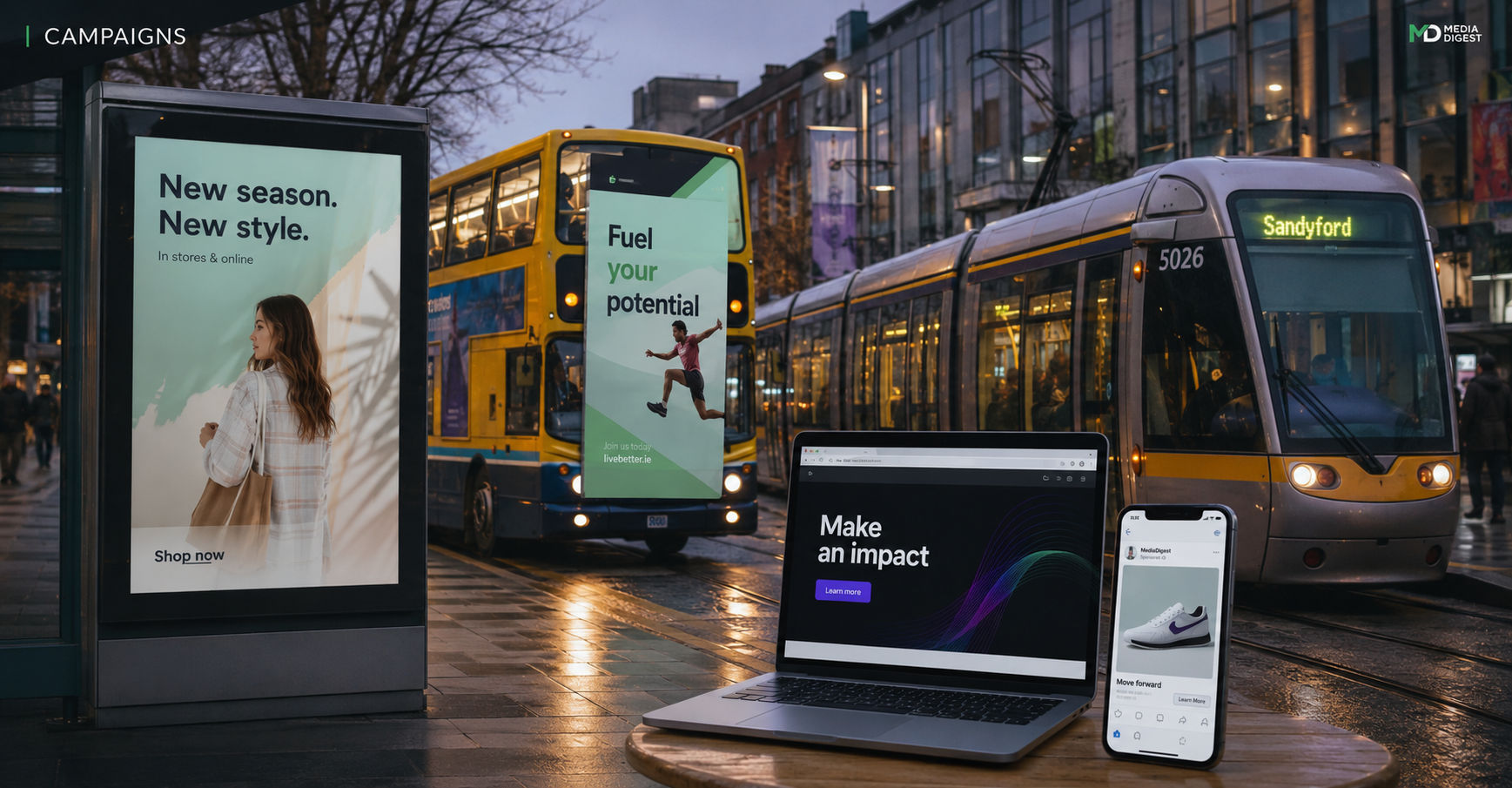
Digital out of home is gaining momentum as advertisers look for high-impact, public-facing media that can cut through crowded digital feeds. For any media campaign ireland brief, DOOH offers a useful combination of visibility, flexibility and contextual relevance.
Unlike static legacy planning models, today’s outdoor strategy is increasingly dynamic. Creative can be updated quickly, tailored by location or time of day, and integrated with wider digital activity. This makes DOOH more than a branding channel; it is becoming part of connected campaign ecosystems.
There is also a broader rethink underway around traditional summer outdoor planning. Old assumptions about seasonality and audience movement do not always hold in the same way they once did. Smart media planning now requires fresher audience analysis rather than repeating historic templates.
Platform Power Is Reshaping Budget Allocation
The battle for media spend is increasingly concentrated among the world’s biggest platforms. Video, social and retail-media-style environments continue to absorb larger shares of advertising budgets, and that has direct implications for every media campaign ireland decision maker.
Video platforms, in particular, are expanding beyond mobile and desktop screens into living-room experiences. This shift gives advertisers access to more premium, high-attention viewing contexts while preserving the data and targeting advantages of digital media. As a result, campaign planning is becoming less about siloed channels and more about cross-screen audience strategy.
At the same time, marketers need to remain cautious. Platform scale is attractive, but overreliance can create vulnerability. Changes in pricing, algorithms, moderation policies or measurement standards can quickly alter campaign performance.
A balanced channel mix matters
A resilient campaign strategy often includes:
- High-reach platforms for scale
- Trusted publisher environments for credibility
- Outdoor and audio for incremental attention
- Owned content channels for long-term brand control
Content, Culture and Public Opinion Matter More Than Ever
Campaigns do not exist in a vacuum. In Ireland, cultural relevance and public sentiment can have a major influence on how advertising is received. Whether the format is branded podcasts, culturally led storytelling or more provocative mass-market creative, reaction can be divided.
That does not mean brands should avoid bold ideas. It means they should test their message carefully and understand the conversation surrounding it. A successful media campaign ireland plan should account for not only reach and frequency, but also resonance.
Branded podcasts, for example, can deepen engagement when there is a strong editorial idea and authentic fit. Poorly executed, they risk feeling forced or forgettable. The same is true of culturally driven campaigns: when they reflect real audience insight, they can strengthen affinity; when they feel opportunistic, they often fall flat.
Consumer Pressure Is Forcing Sharper Messaging
Irish consumers are under financial pressure, and that reality should shape campaign tone. Messaging that ignores cost sensitivity or changing priorities may struggle to connect. Today’s audience is often more selective, more value-conscious and less forgiving of vague brand claims.
For marketers, this means creative strategy and media placement must work together. Strong campaigns are not just seen; they feel timely and relevant. That can involve highlighting value, trust, utility, escapism or emotional connection depending on the category and audience mindset.
The strongest media campaign ireland approaches are therefore built on three foundations:
- Clarity: a simple, believable message
- Relevance: alignment with current consumer concerns
- Flexibility: the ability to optimise quickly as conditions change
What Irish Marketers Should Do Next
If there is one clear lesson from current industry thinking, it is that no campaign can run on autopilot. The market is changing too fast. A high-performing media campaign ireland strategy in 2026 needs to combine data, creativity, channel diversity and cultural awareness.
Brands that win will be those willing to question old planning habits, test new formats and maintain a strong understanding of how audiences actually consume media today. In a fragmented and fast-moving environment, the smartest campaigns will not necessarily be the loudest. They will be the ones that are most relevant, responsive and strategically grounded.
For agencies and marketers alike, that is the real takeaway: better results start with better adaptation. And for anyone building a media campaign ireland plan, adaptation is no longer optional; it is the core of modern campaign success.