What separates an average campaign from one that genuinely shifts brand perception? In today’s crowded, fast-moving market, a successful media campaign ireland strategy depends on more than reach alone. It requires attention, relevance, timing and a clear understanding of how Irish audiences behave across digital, audio, video and out-of-home channels.
The latest conversations across the marketing industry point to a major shift in how brands should think about campaign planning. From the growing influence of AI and the evolution of digital out-of-home to renewed debate around creative effectiveness, marketers in Ireland are being challenged to build campaigns that are both culturally aware and commercially accountable. For brands, agencies and media planners, that means rethinking what makes a modern campaign work.
Why a Media Campaign Ireland Strategy Needs to Evolve
The Irish advertising landscape is no longer defined by simple channel buying or broad demographic targeting. A modern media campaign ireland approach must reflect changing consumer attention, fragmented media consumption and higher expectations around relevance.
Several themes are shaping campaign thinking right now:
- Attention is harder to win as audiences move between platforms, formats and devices.
- Brand recall matters more than ever, especially in competitive categories.
- Digital transformation is changing how campaigns are planned, bought and measured.
- Cultural context plays a bigger role in how Irish consumers respond to messaging.
- AI tools are influencing everything from media strategy to brand perception.
This means campaign success is increasingly tied to consistency and memory-building, not just short-term clicks or impressions. The brands that stay visible, distinctive and relevant are the ones most likely to remain top of mind when purchase decisions are made.
The Channels Driving Stronger Campaign Performance
Digital Out-of-Home Is Becoming More Strategic
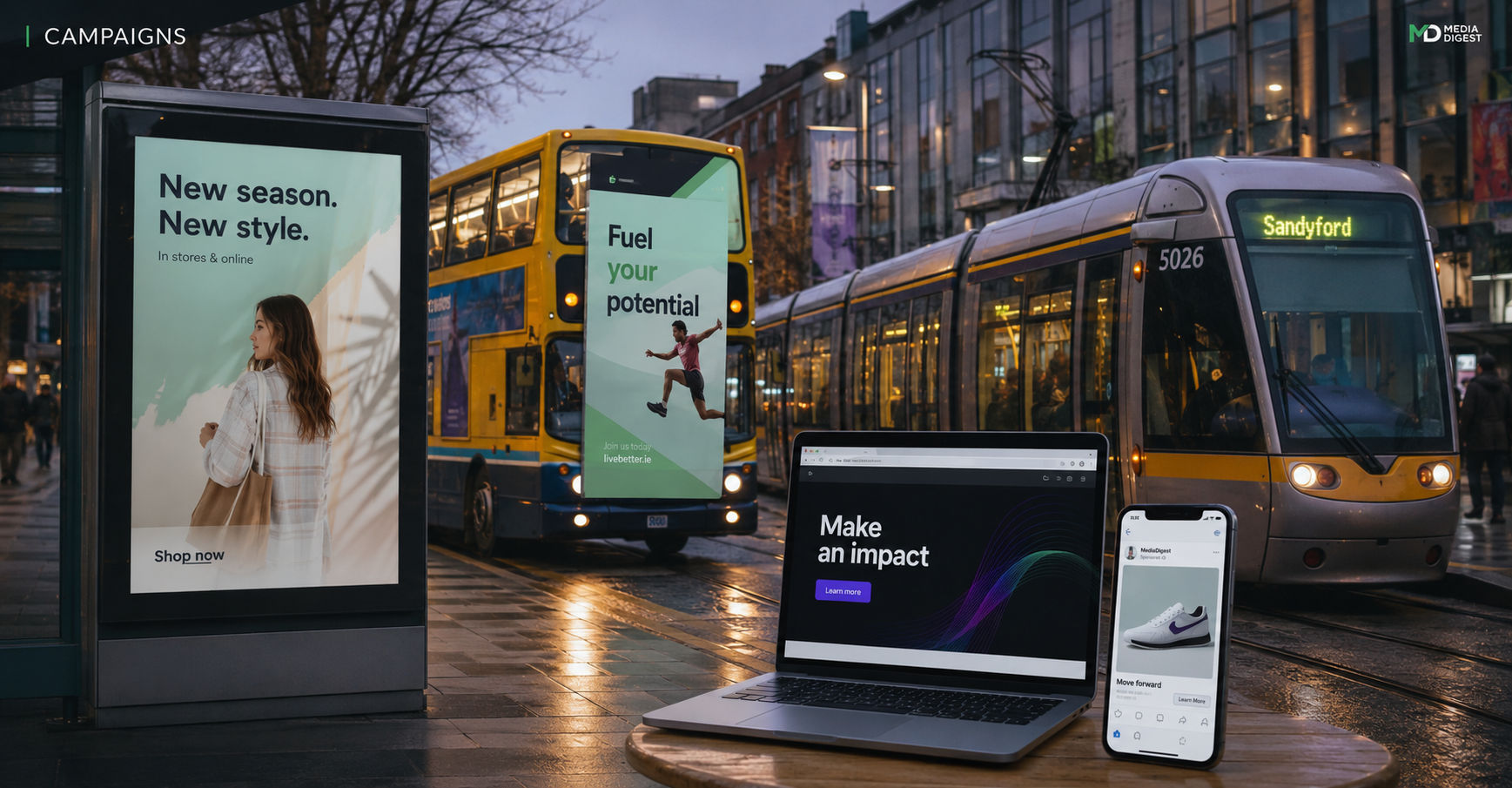
Digital out-of-home advertising continues to gain importance in Ireland, particularly as advertisers look for high-impact visibility in public spaces. But the value of the format is no longer just scale. Its strength lies in contextual placement, dynamic creative and its ability to complement mobile, social and video activity.
For any media campaign ireland plan, digital out-of-home can help:
- Extend reach beyond online environments
- Reinforce brand memory through repeated exposure
- Support local targeting in key urban and commuter areas
- Create stronger cross-channel storytelling
As media planners revisit traditional seasonal assumptions, especially around summer campaigns, out-of-home is being reassessed through the lens of audience movement, real-time relevance and integration with wider brand activity.
Video Platforms Continue to Expand Influence
Video remains central to campaign strategy, with connected TV, online video and large-screen streaming environments giving advertisers more ways to deliver high-quality storytelling. The growth of platform-based advertising, including YouTube and major social ecosystems, has made screen-based brand building more measurable and more adaptable.
That said, the challenge for a media campaign ireland brief is not simply to chase views. It is to match creative format to audience mindset. Long-form storytelling, short-form attention grabs and sequential messaging all have different roles to play depending on campaign objectives.
Audio and Podcasts Offer Intimacy, But Need Careful Fit
Branded podcasts and digital audio present powerful opportunities for engagement, especially when audiences are highly attentive. However, not every brand is naturally suited to long-form audio environments. Success depends on authenticity, production quality and a clear strategic role within the broader campaign mix.
Used correctly, audio can support a media campaign ireland plan by building familiarity and trust in moments where visual competition is low. But brands should avoid treating podcasts as a trend-led add-on. The channel works best when it aligns with audience interests and brand voice.
Creative Effectiveness Still Matters Most
Media placement can amplify a message, but it cannot rescue weak creative. One of the clearest lessons from current industry thinking is that campaign performance still comes back to the fundamentals: memorable ideas, consistent branding and emotionally resonant storytelling.
Strong creative often includes:
- A clear brand asset or distinctive visual identity
- A simple, immediate message
- Emotional or cultural relevance
- Adaptability across multiple media formats
- Repetition that reinforces, rather than fatigues
The reminder effect is especially important. Campaigns that gently and consistently refresh memory can outperform those that rely on one big burst of visibility. For marketers planning a media campaign ireland execution, this makes frequency, coherence and creative consistency essential.
How AI Is Reshaping the Media Campaign Ireland Landscape
AI is rapidly becoming part of campaign planning, audience analysis, content production and performance optimisation. It offers speed and scale, but it also introduces new risks. Brands must now think not only about how they use AI internally, but also about how AI-driven platforms interpret, surface and represent their brand externally.
In practical terms, AI can support a media campaign ireland strategy by helping teams:
- Analyse audience behaviour faster
- Test creative variations more efficiently
- Improve media allocation based on live performance signals
- Identify emerging consumer interests and search patterns
Yet human judgment remains critical. Relational intelligence, cultural sensitivity and strategic experience still matter greatly in campaign planning. Automation can enhance decision-making, but it should not replace the people who understand nuance, emotion and local market realities.
What Irish Marketers Should Prioritise Next
To build a more effective media campaign ireland framework, marketers should focus on a few core priorities:
- Plan for memory, not just metrics: Reach and clicks matter, but long-term brand salience is what drives future demand.
- Use channels for their strengths: Let each platform play a distinct role within the campaign journey.
- Stay culturally tuned in: Irish audiences respond to relevance, authenticity and context.
- Balance AI with human insight: Data can guide strategy, but people shape meaning.
- Measure beyond short-term response: Include brand lift, attention and recall where possible.
Above all, marketers should resist one-size-fits-all planning. The most effective campaigns are integrated but flexible, data-informed but creatively led, and always grounded in audience understanding.
Conclusion
The future of a successful media campaign ireland strategy lies in smarter integration, sharper creative and a stronger grasp of how people actually pay attention. Irish brands that combine memorable storytelling with the right media mix, thoughtful use of AI and culturally relevant execution will be best placed to stand out. In a market where attention is precious, the winners will be the campaigns that are not only seen, but remembered.